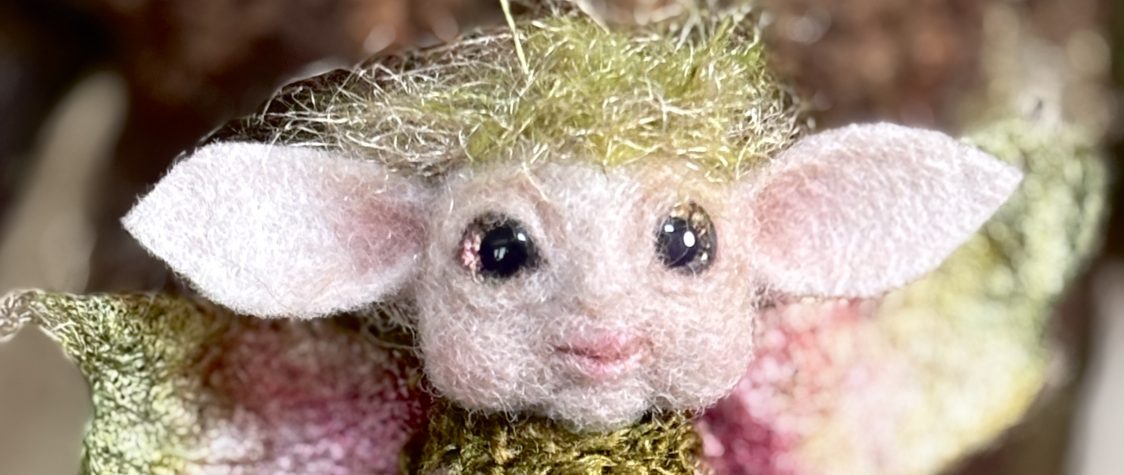
Silk part 3
Why am I enthusing about silk in a needle felting blog? Because my recent large needle-felted sculpture incorporated several rather unusual forms of silk. The silk components are being explained in parts.
Most people know silk as a luxurious fabric or a lovely fiber to spin. But did you know there are also silk carrier rods, silk cocoon “cakes,” throwster’s waste, and other wonderfully peculiar forms that are just waiting to be explored in fiber art? Let me show you what I mean…
A little background on “Elvish”
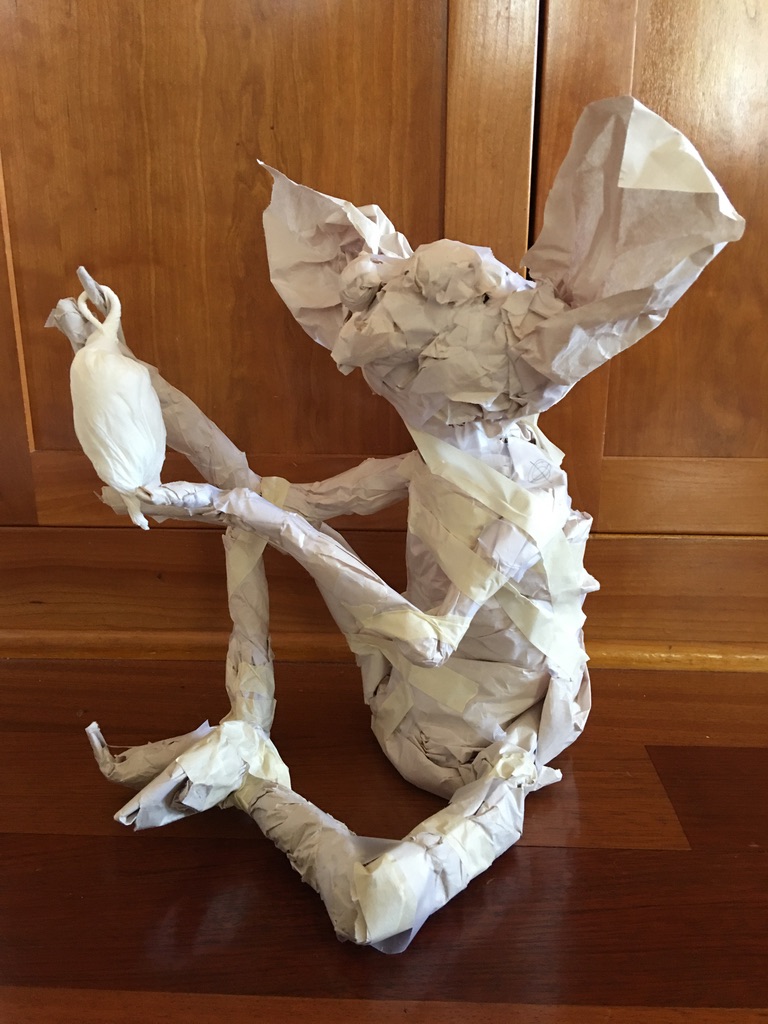
before investing long hours in needle felting over wire armature.
I began my sculpture, The Hatchling” with little more than a partly formed idea and a paper mockup. Eventually, I nicknamed it “Elvish,” as simply easier than continually referring to it as “that rather large elf-like creature I’m working on.”
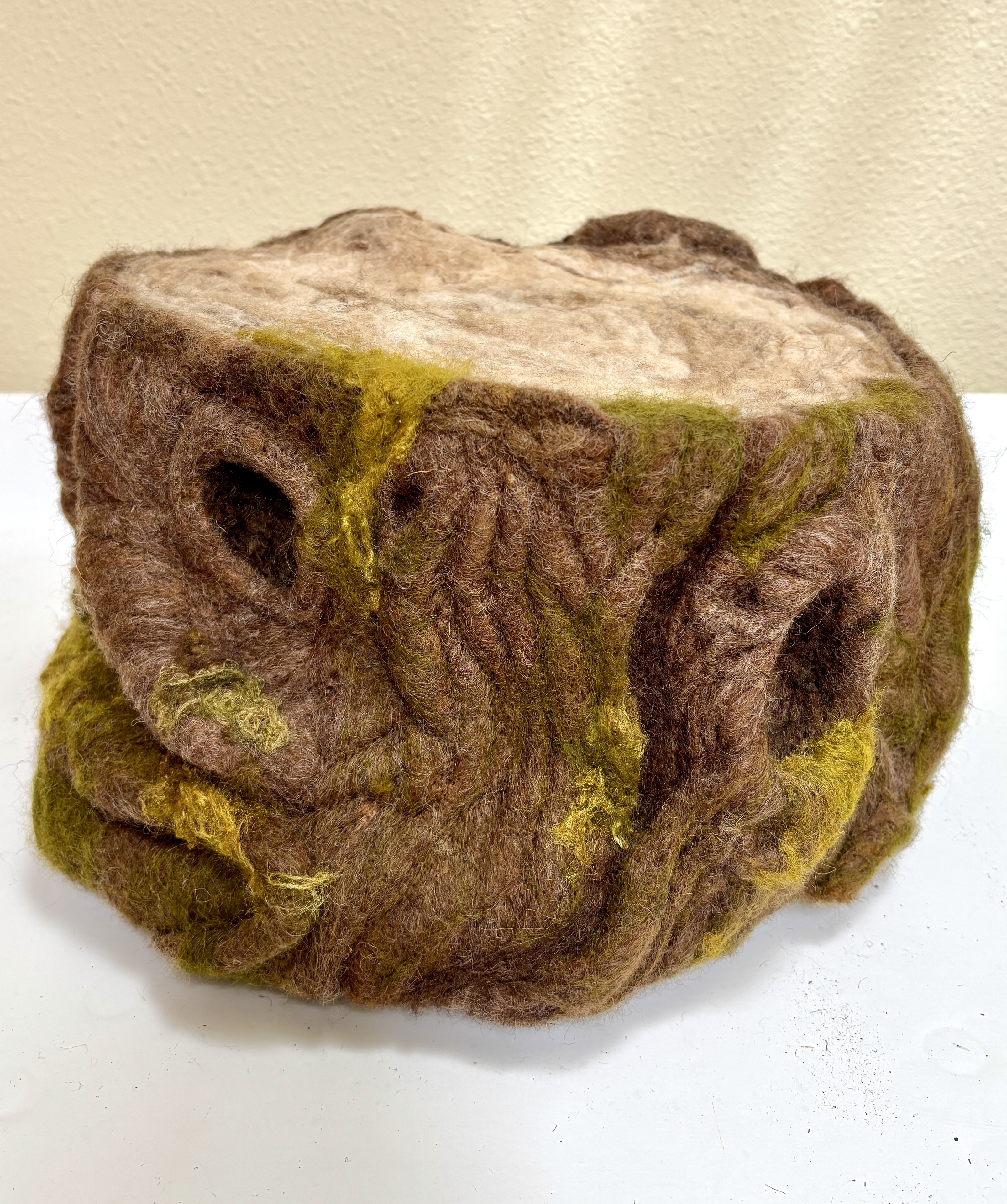
Finding the woody peduncle silk had sparked the idea for a nest (Part 2). Afterwards, I spread out my collection of unusual silks and let their curious shapes and textures suggest what they might become.
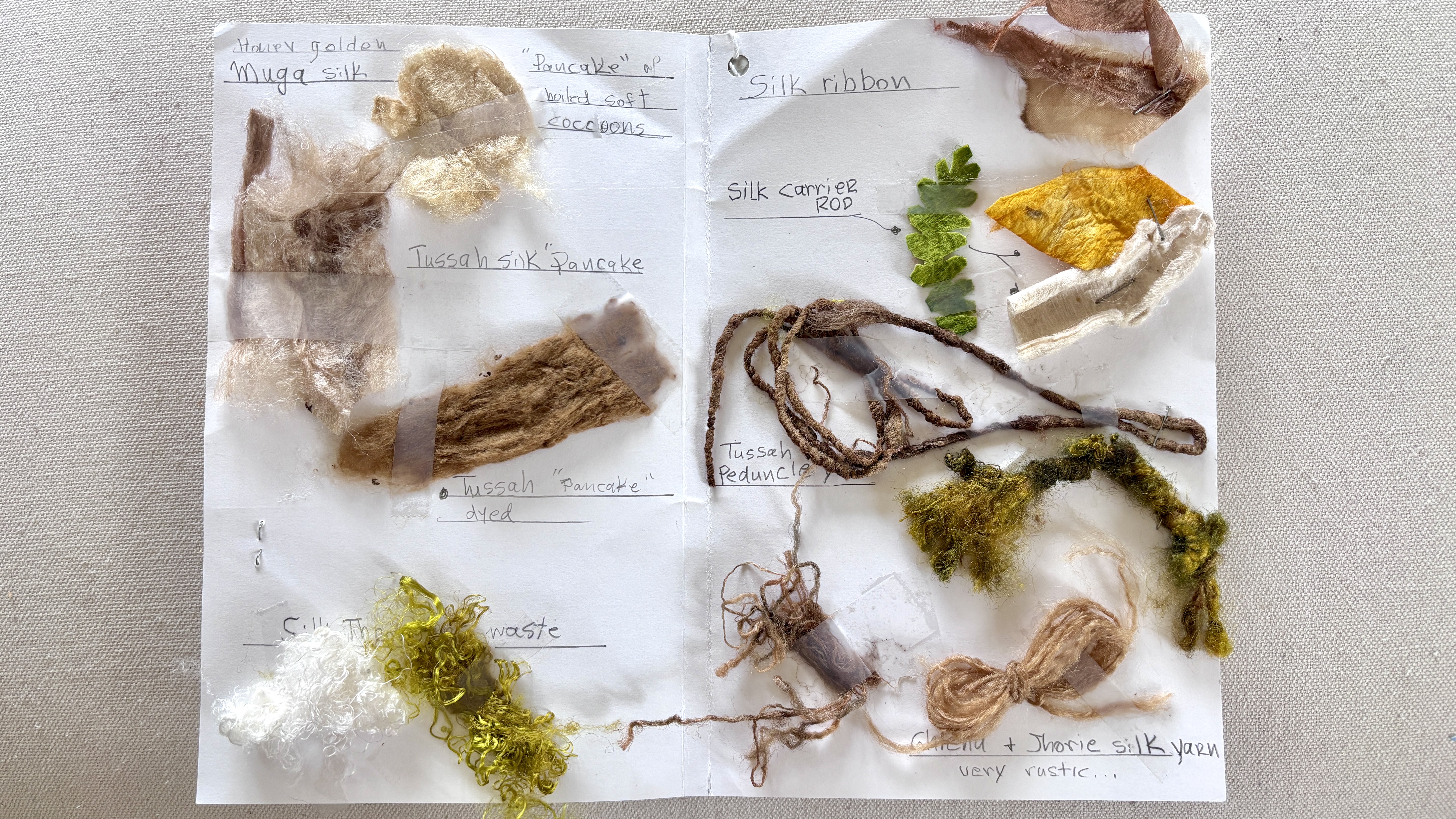
My attention next turned to these peculiar-looking things.
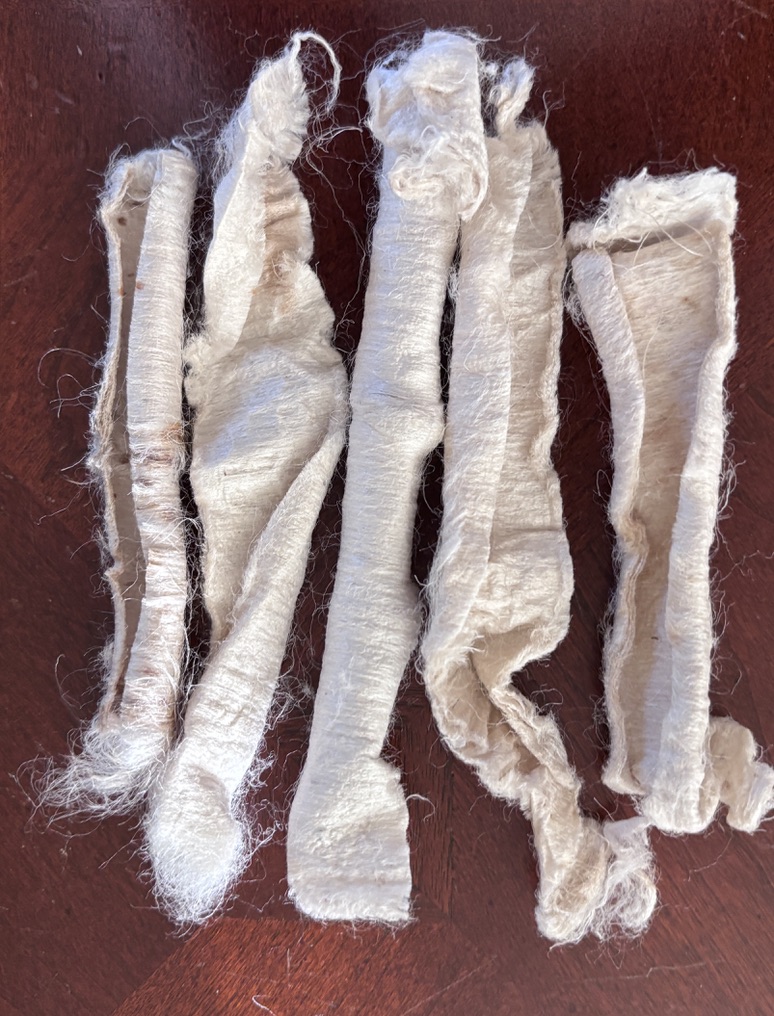
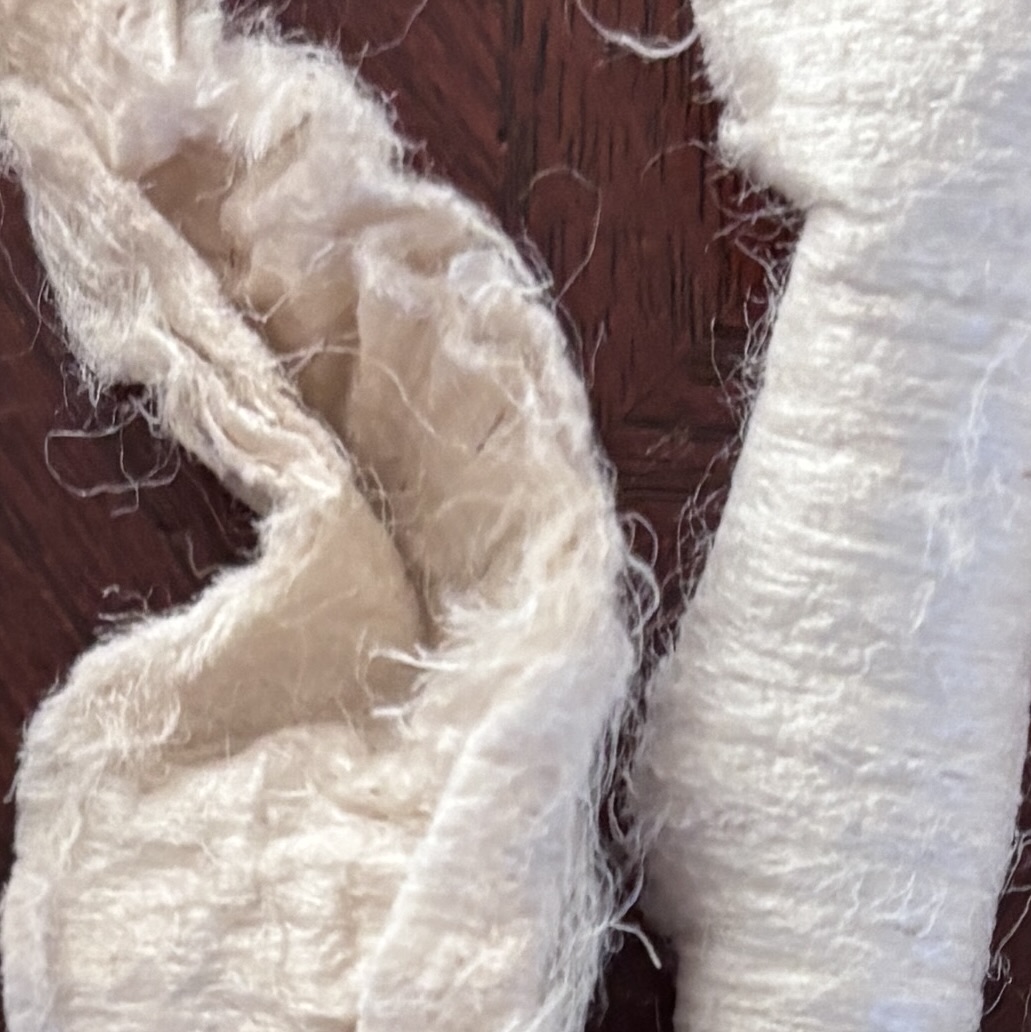
I bought a package of these rods at a past fiber festival, figuring eventually I’d dream up some crafty use for them. (And…now we know exactly how my stash grows. Does that happen to you too?)
From oddball silk form to fern fronds!
As a spinner, I’d always been drawn to shiny silk fibers, either to spin on their own or blend with wool to make lovely yarn. Eventually online searches revealed silk in all sort of forms, and I amassed a couple shoeboxes full. The silk carrier rods looked inviting to play with.
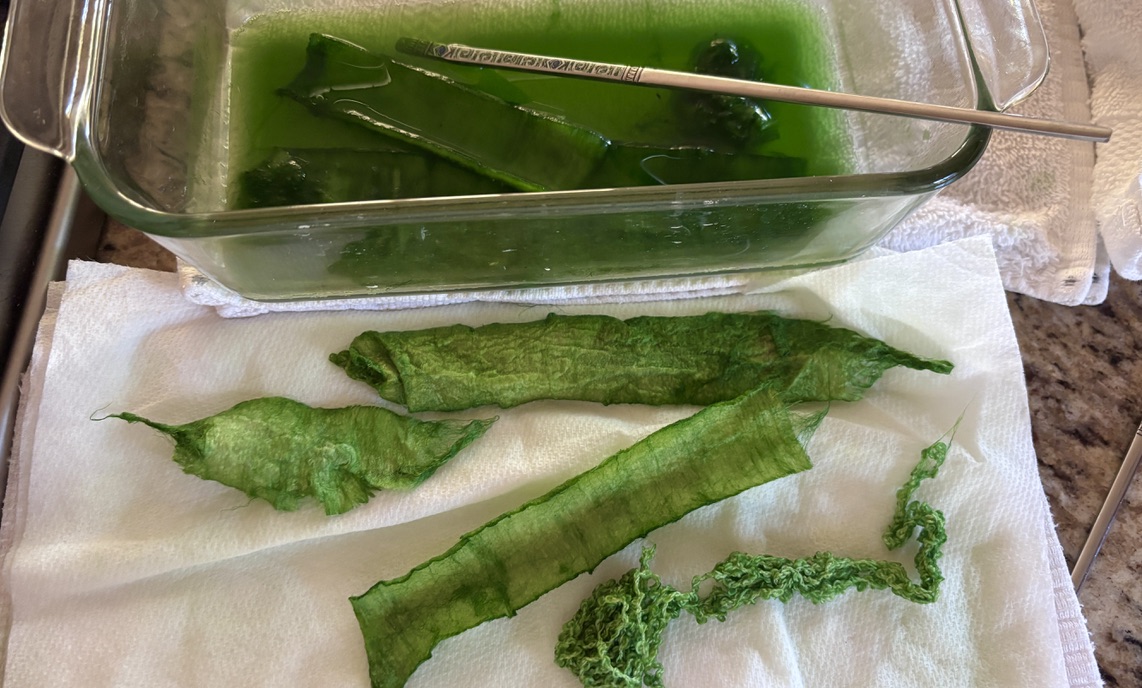
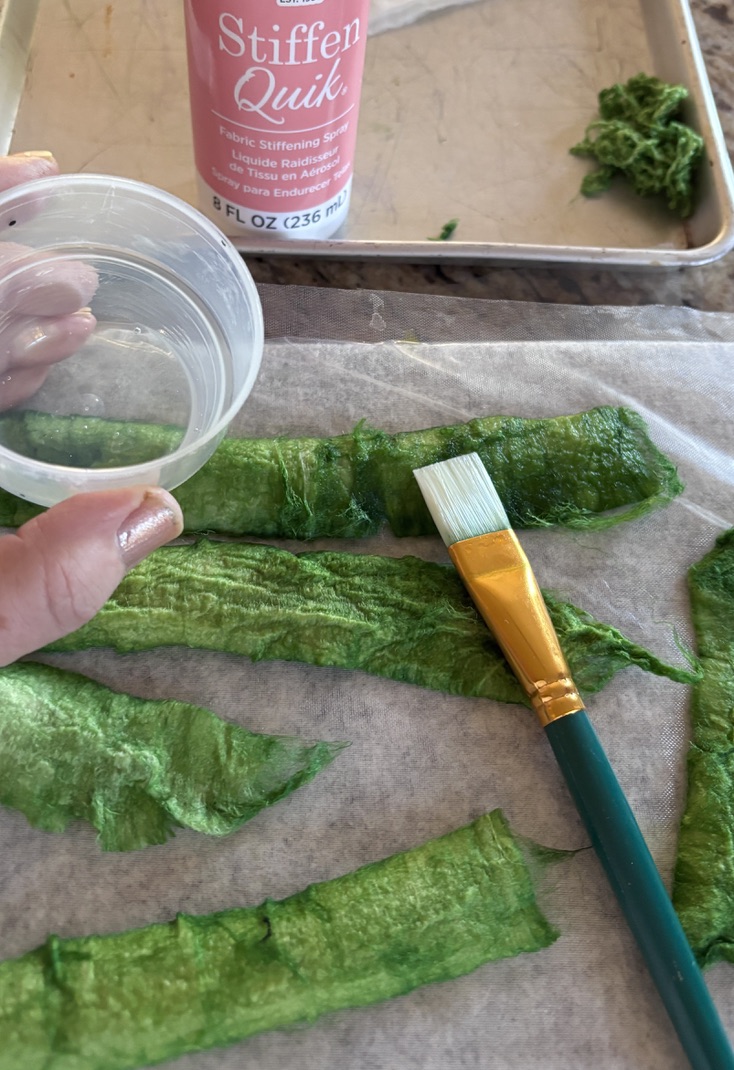
Dyed green carrier rods. Peeled, dried, stiffened, wired, & trimmed into fern fronds.
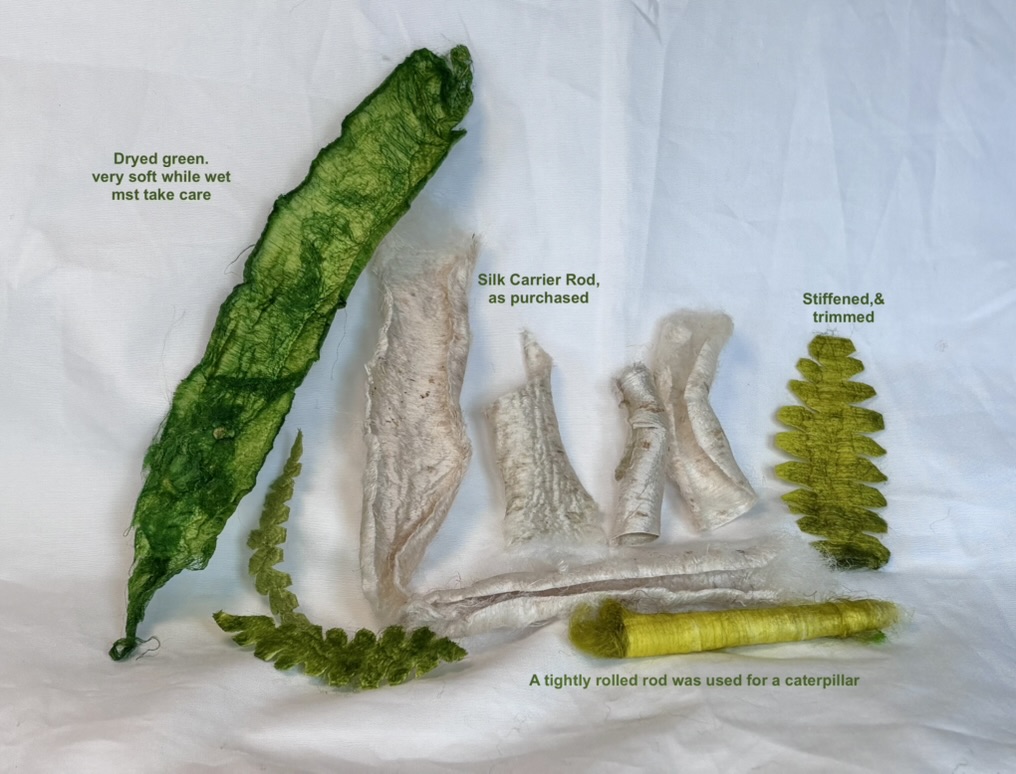
The raw carrier rods were quite stiff, but I found that hot dye baths softened them into delicate, floppy sheets. After dyeing them green and letting them dry, I applied a coat of fabric stiffener to bring back some crispness. Now I could trim the material into individual fern fronds.
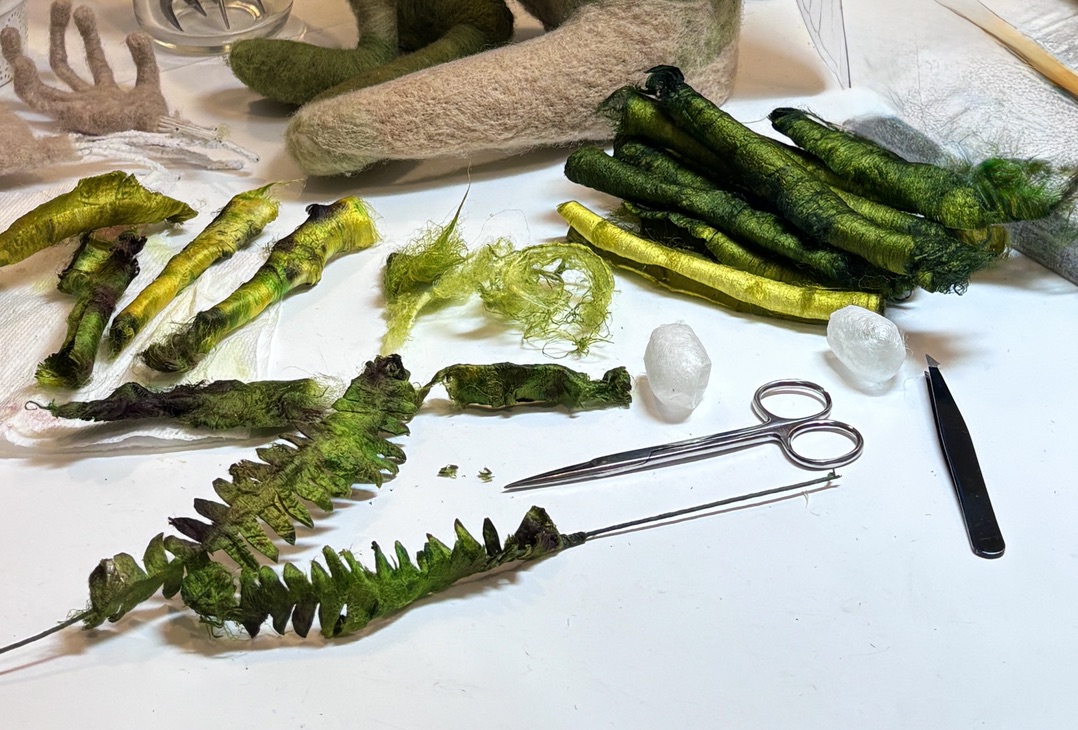
What a transformation. Something that had looked like an odd assortment of silk scraps was beginning to resemble woodland foliage.
Of course, inspiration is the easy part. Trying out the ideas involved days of tinkering, experimenting, and occasionally swearing at the materials! Example: I dyed a few silk carrier rods, let them dry, then peeled apart their thick layers into thinner, more delicate pieces. Success? Not yet. The dye hadn’t penetrated the inner layer, which meant a 2nd trip into the dye bath. If at first you don’t succeed…gotta keep at it.
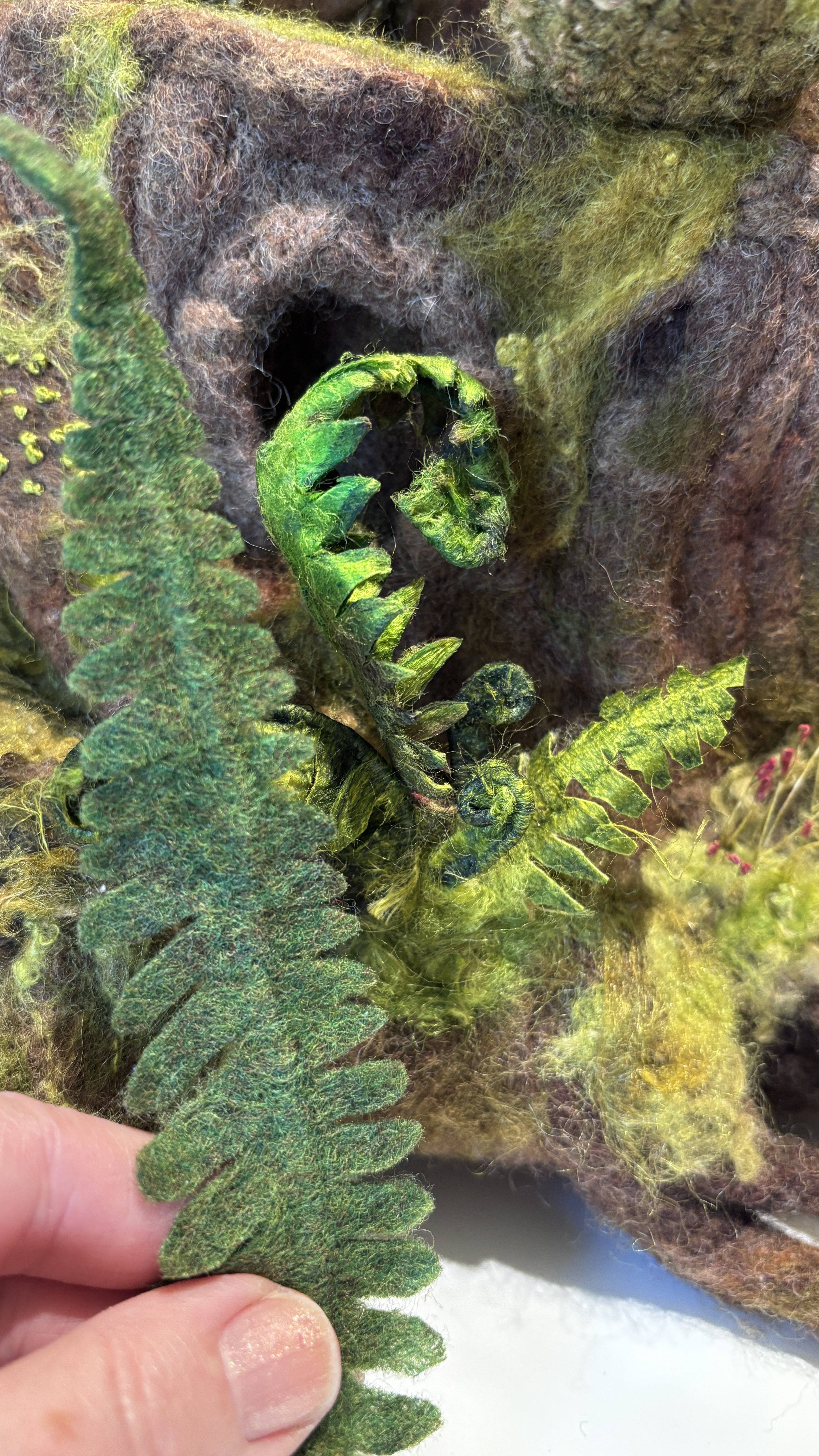
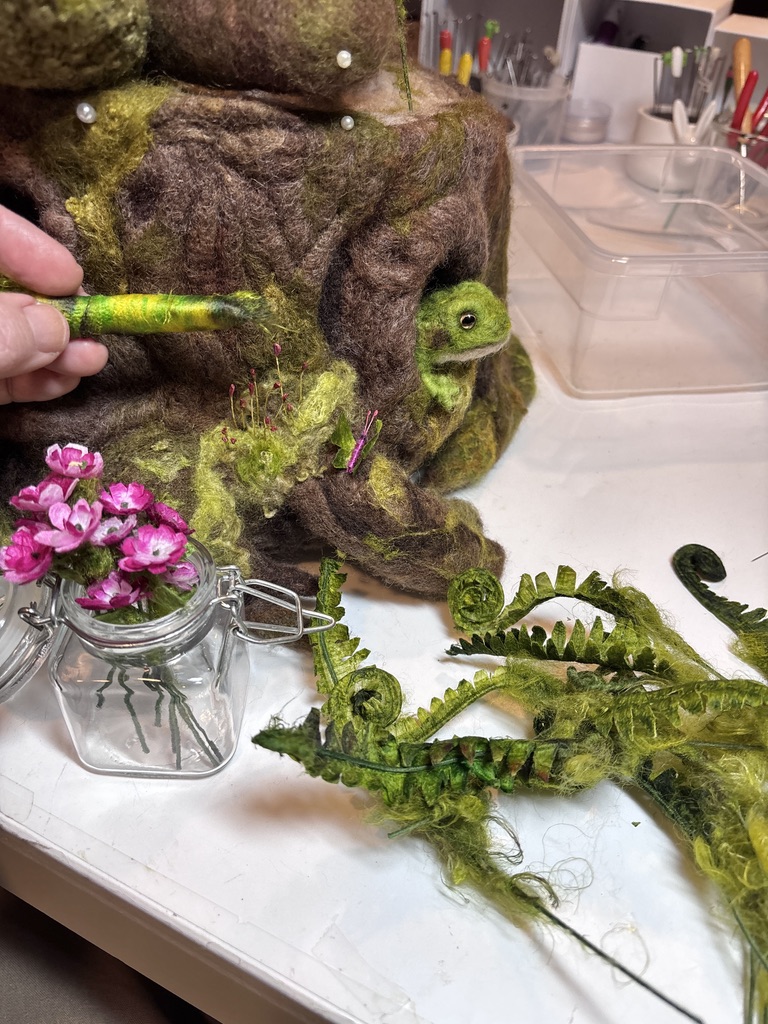
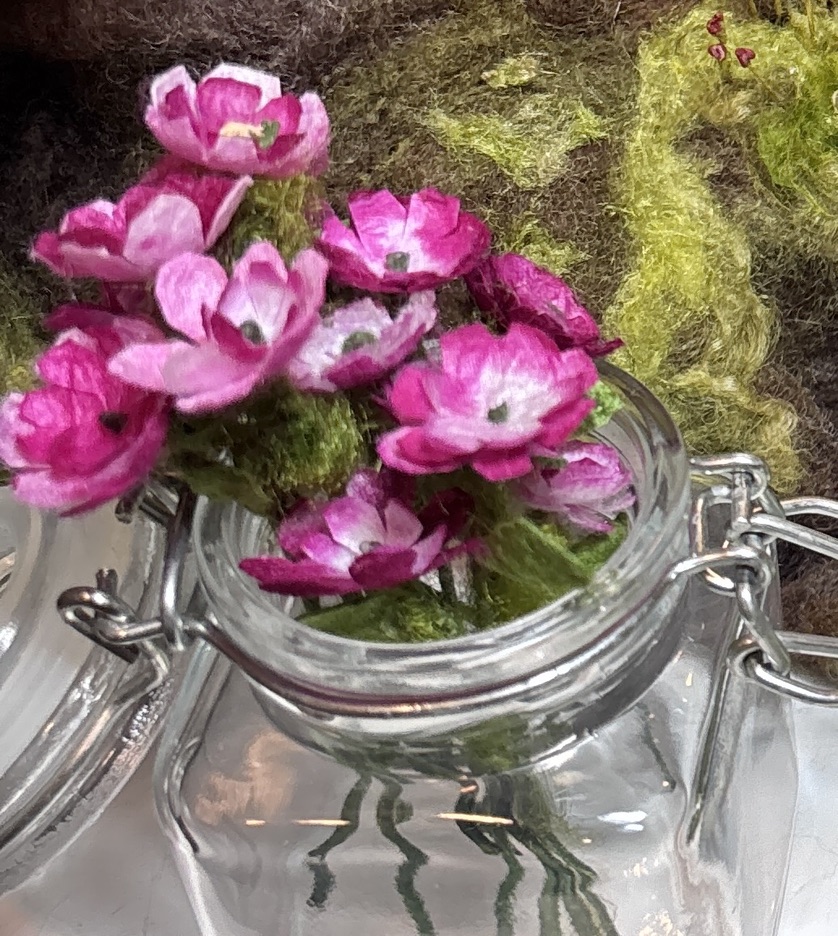
Silk carrier rod ferns being attached to the tree stump, together with pink flowers made from mulberry silk cocoons (the white oval cocoons most commonly avalable. And… is the tightly curled rod I’m holding about to become a caterpillar? We’ll soon find out.
I have been giddy happy to discover how much silk could embellish and beautify my needle felted wool “Elvish” sculpture. I seldom begin with a precise plan. More often, curiosity is the prompt: “What if…?” and “Hmmmm… what could I do with THAT?”
A bit of daydreaming follows, an idea ~ in sketch or crumpled paper ~ takes shape, and before long I’m happily experimenting with materials. Scrunching up paper models and wire armatures, tinkering and humming as i watch the work evolve.
The ferns were just one discovery. There were still silk cocoons to trim, flowers to fashion, and more unusual textures to work into Elvish’s woodland world.
Later, scanning the variety of silks I had spread out, I pondered next steps. Hmmm… what could I possibly do with this FABULOUS golden silk cocoon? Yes… I think I have an idea. Stay tuned… there’s more fiber magic ahead!
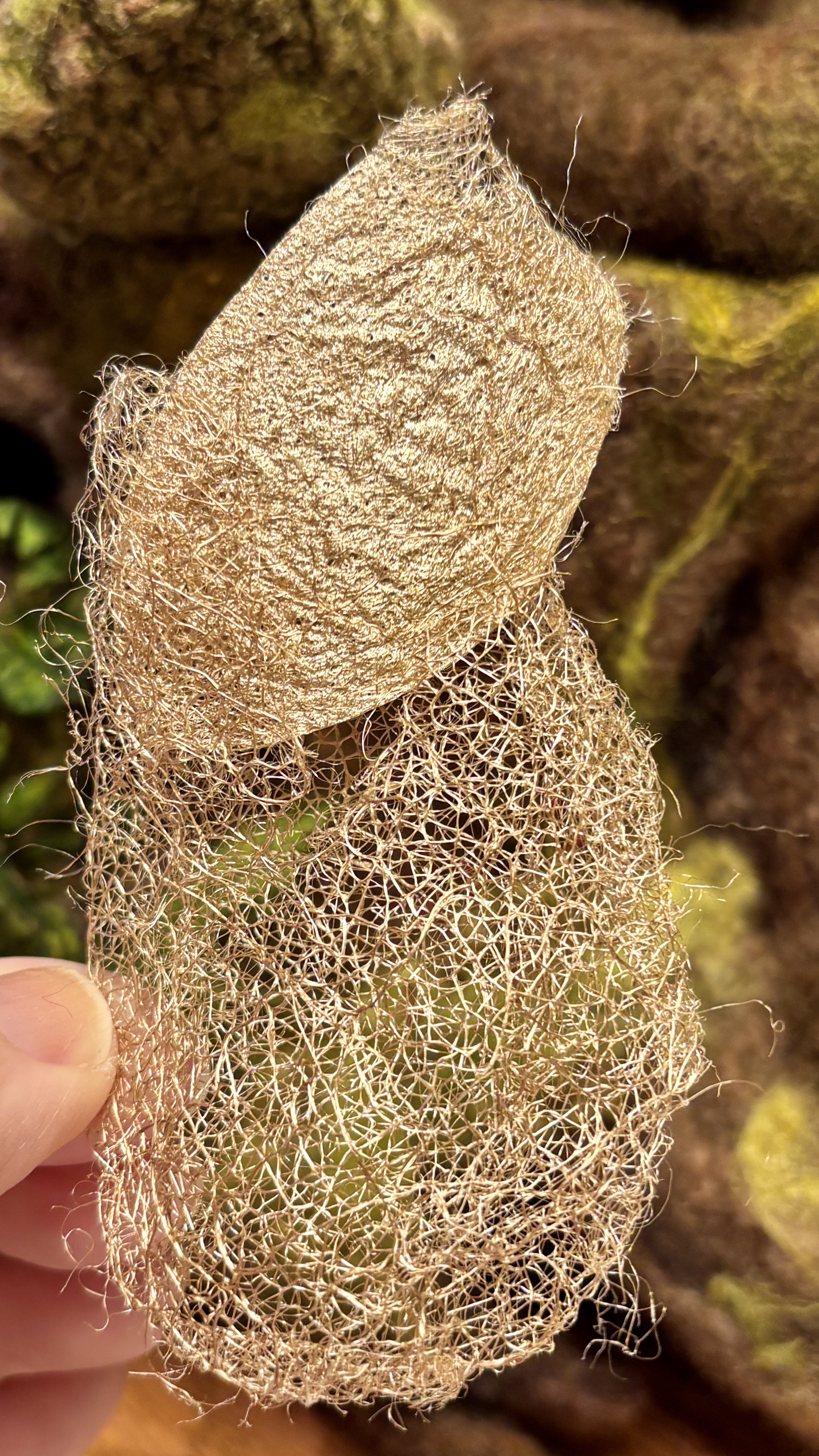
In Silks Part 4, I’ll show what can be done with the Ceranchia cocoons (inner and outer) to dress up a Needle felted wool sculpture of “The Hatchling” wherein the large Elvish holds a wee baby hatchling.

